
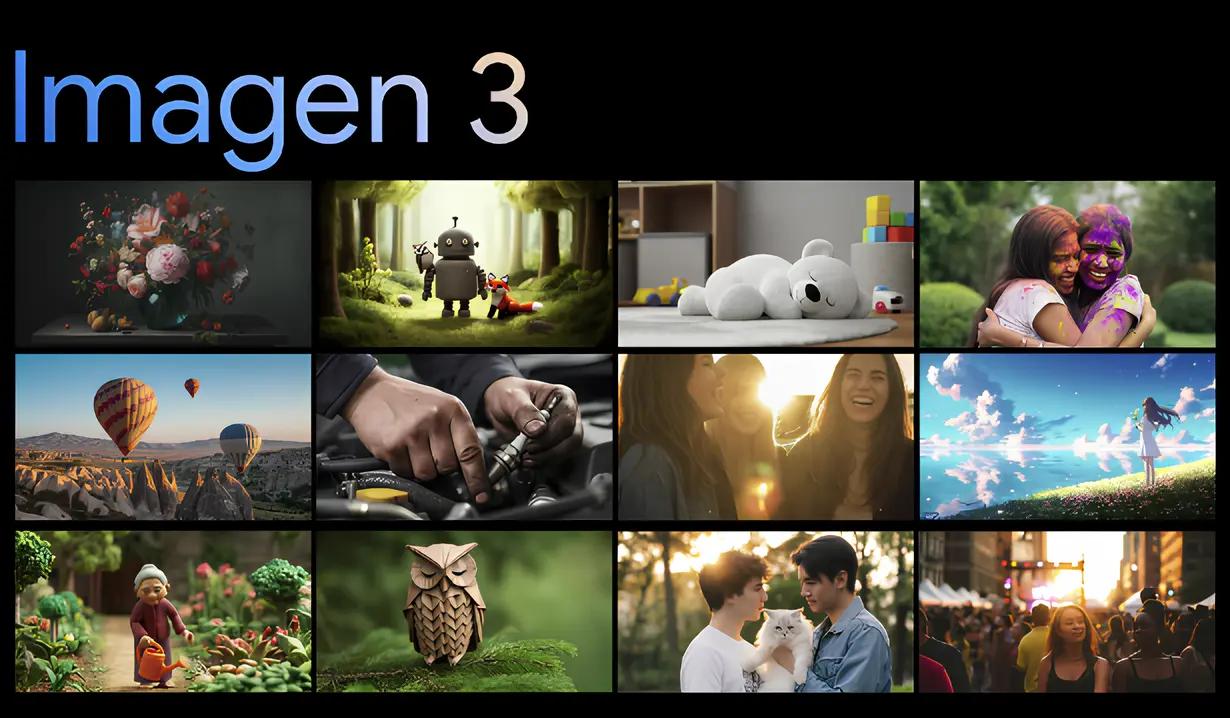
Artificial intelligence (AI) has revolutionized the creation of digital imagery, enabling the generation of photorealistic scenes, portraits, and artworks at the click of a button. However, this rapid advancement has also given rise to a critical question: how can we distinguish between genuine photographs and AI-generated images? As AI systems become more sophisticated, the line between “real” and “synthetic” blurs, posing challenges for journalists, legal professionals, digital artists, and everyday users alike. In this article, we synthesize the latest developments and expert insights to provide a comprehensive guide on judging AI images.
What makes AI-generated images hard to detect?
AI-generated images are produced by powerful generative models—such as diffusion networks and generative adversarial networks (GANs)—that learn to mimic the statistical patterns of real-world photographs. Recent research demonstrates that these models can generate intricate textures, accurate lighting, and realistic reflections, making superficial analysis insufficient.
Semantic plausibility versus pixel-level artifacts
While early AI-generated images often exhibited glaring artifacts—such as mismatched shadows or distorted backgrounds—modern models overcome many of these flaws. Instead, they introduce subtler inconsistencies, like slightly warped text in the background or anomalous finger counts on hands, detectable only through detailed forensic analysis. Such semantic discrepancies require examining high-level content (e.g., object relationships) rather than relying solely on pixel-level clues.
Distributional similarities and overfitting
Advanced detectors exploit the fact that AI-generated images stem from a finite set of training distributions. For instance, the Post-hoc Distribution Alignment (PDA) method aligns test images with known fake distributions to flag anomalies—a technique achieving 96.7% accuracy across multiple model families . However, detectors may falter when confronted with novel generative architectures, highlighting the need for continual updates and broad training datasets.
Which tools and methods are available for detection?
A variety of commercial and open‑source tools have emerged to address the detection challenge, each leveraging different analytic strategies—ranging from metadata inspection to deep‑learning inference.
AI content detectors: performance and limitations
Recent tests of leading AI content detectors reveal mixed results. A study by Zapier evaluated multiple tools and found variability in detection rates depending on the image generator used. Tools like Originality.ai and GPTZero showed strengths in flagging clearly synthetic images but struggled with subtle generative artifacts in high‑resolution outputs.
Metadata and hidden-watermark approaches
Some detectors rely on forensic metadata analysis. Metadata signatures—such as atypical camera models or processing software tags—can hint at AI generation. Companies like Pinterest implement metadata-based classifiers to label AI‑modified images, allowing users to filter them out in feeds. Yet, savvy users can strip metadata entirely, necessitating complementary methods.
Deep‑learning inference models
Google’s latest AI updates include research into in‑browser real-time detection via optimized ONNX models integrated into Chrome extensions. The DejAIvu extension overlays saliency heatmaps to highlight regions most indicative of synthetic origin, achieving fast inference with low latency . Such tools combine gradient‑based explainability with detection, offering transparent insights into why an image is flagged.
How accurate are current detection techniques?
Detection accuracy varies significantly depending on the generative model, image content, and post‑processing applied. While some tools boast high average accuracies, real‑world performance often differs from controlled benchmarks.
Benchmark performance versus real‑world robustness
In benchmark tests, detectors like PDA and Co‑Spy achieve over 95% accuracy on curated datasets. However, when applied “in the wild,” their performance can drop as generative models evolve and adversarial post‑processing (e.g., JPEG compression, resizing) is introduced. Robustness against unseen models remains a major hurdle.
Generalization challenges
Few‑Shot Detector (FSD) aims to address generalization by learning metric spaces that distinguish unseen fake images from real ones with minimal samples. Early results show FSD outperforming baseline detectors by 7–10% on novel generative models, suggesting a promising path forward for adaptive detection frameworks.
What are the practical steps for individuals and organizations?
Beyond specialized software, users can employ a combination of visual inspection, metadata analysis, and tool‑assisted detection to judge the authenticity of images.
Visual and context-based cues
- Examine reflections and shadows: Check for natural consistency—AI often misrenders reflective surfaces or shadow directions.
- Inspect text and backgrounds: Look for blurred or unreadable text, repeated patterns, or unnatural perspective shifts.
- Verify source credibility: Cross‑reference images with known databases or news outlets to confirm provenance.
Metadata and provenance checks
- Use EXIF viewers: Tools like ExifTool can reveal camera make, model, and editing software history. Inconsistencies (e.g., image claimed as a phone snapshot but showing professional Photoshop metadata) raise red flags.
- Search for image hashes: Reverse‑image search engines can detect earlier appearances of the image online, indicating recirculation or manipulation.
Leveraging AI detectors responsibly
- Combine multiple detectors: No single tool is infallible; using complementary methods increases confidence.
- Stay updated on tool capabilities: Subscribe to vendor newsletters or academic updates—such as Google’s April AI announcements—for new detection releases and performance reports .
- Implement workflows for critical use cases: Newsrooms, legal teams, and social media platforms should integrate detection tools into content pipelines, with human oversight for ambiguous cases.
What legal frameworks govern AI painting?
How is the UK addressing AI transparency in data bills?
In May 2025, UK ministers blocked an amendment requiring AI firms to declare use of copyrighted content in training datasets, invoking financial privilege to omit the transparency clause from the Data (Use and Access) Bill . The amendment—championed by Baroness Kidron, Elton John, and Paul McCartney—sought to compel firms to list copyrighted works and establish licensing schemes; its removal has provoked outcry from over 400 artists demanding immediate reform .
What did the US Court of Appeals decide on AI works?
On March 21, 2025, the U.S. Court of Appeals ruled that purely AI-generated works lack human authorship and thus are ineligible for copyright protection . This landmark decision underscores the gap in existing IP laws: while human artists can secure exclusive rights, creations emerging solely from AI remain in the public domain, raising questions about commercial exploitation and moral rights.
Are there state-level AI disclosure laws?
Several U.S. states have proposed bills mandating AI‑use disclosures across media—including art, text, and video. Debate centers on First Amendment concerns: mandatory disclaimers and watermarking, while promoting transparency, may impinge on protected speech and artistic freedom . Legal scholars advocate for a balanced approach that safeguards creators’ rights without stifling innovation.
Judging AI-generated images demands a multi-faceted approach that combines cutting‑edge tools, visual forensics, metadata analysis, and human expertise. By understanding the strengths and limitations of current detection methods, staying informed on the latest research, and adopting responsible workflows, individuals and organizations can navigate the era of synthetic imagery with confidence. As AI continues to advance, so too must our strategies for discerning reality from illusion.
Getting Started
CometAPI provides a unified REST interface that aggregates hundreds of AI models—including ChatGPT family—under a consistent endpoint, with built-in API-key management, usage quotas, and billing dashboards. Instead of juggling multiple vendor URLs and credentials.
Developers can access GPT-image-1 API (GPT‑4o image API, model name: gpt-image-1) and through CometAPI to make AI-generated images. To begin, explore the model’s capabilities in the Playground and consult the API guide for detailed instructions. Note that some developers may need to verify their organization before using the model.