
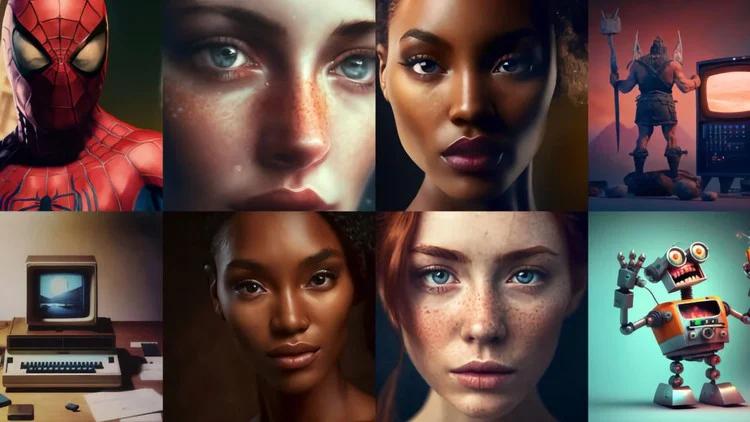
AI image generator have become indispensable tools for artists, designers, marketers, and researchers, transforming text prompts into vivid visuals in seconds. With rapid advances in model architectures, training data, and deployment options, the question “Which AI image generator is best?” no longer has a one‑size‑fits‑all answer. Instead, the “best” choice depends on factors such as intended use, desired style, budget, privacy requirements, and technical expertise.
What criteria should guide your choice of AI image generator?
Before selecting a tool, it’s crucial to define your priorities. Five core dimensions determine overall suitability:
1. Output quality and realism
- Photorealism: Models vary in their ability to render light, shadow, textures, and anatomically correct forms.
- Coherence: Consistency across complex scenes (multiple subjects, backgrounds, props).
- Detail fidelity: Sharpness of edges, clarity of small features (hands, text, fine patterns).
2. Artistic versatility and stylistic range
- Pre‑built styles: Impressionist, cyberpunk, anime, minimal line‑art, etc.
- Style transfer: Ability to emulate famous artists or custom reference images.
- Creative exploration: Level of abstraction or surrealism supported without artifacts.
3. Customization and user control
- Prompt engineering: Sensitivity to keyword weighting, textual inversion.
- Inpainting & outpainting: Local edits within existing canvases or expanding artwork.
- Parameter tuning: Adjusting CFG scale, sampling steps, seed control for reproducibility.
4. Performance, latency, and throughput
- Generation speed: Seconds per image (web vs. local GPU).
- Batch processing: Capability to generate many images in parallel.
- Compute requirements: GPU memory needs for local deployment.
5. Cost, licensing, and accessibility
Open source vs. proprietary: Flexibility for customization and on‑premise hosting.
Pricing models: Subscription tiers, pay‑per‑image, free credits.
Commercial rights: Usage terms for marketing, publishing, resale.
Which AI Image Generators Are Leading the Market Today?
OpenAI’s GPT Image 1
With the March 2025 update, ChatGPT transitioned from DALL·E 3 to GPT Image 1, integrating image generation directly into the GPT‑4o backbone. This shift uses an autoregressive approach (rather than diffusion), boosting text‑and‑prompt adherence, especially for typographic or graphic design tasks . Free and paid users alike can generate, edit, and inpaint images without leaving the chat environment, a workflow leap that melds conversational AI with creative tooling.
Google’s Imagen 4
Imagen 4 represents Google’s latest text‑to‑image milestone, available for paid preview via the Gemini API and in limited free testing on Google AI Studio. It delivers sharper clarity, improved spelling, and photorealistic renders at up to 1024×1024 resolution, outperforming earlier Imagen iterations in benchmark tests. Early adopters praise its ability to handle complex prompts—such as multi‑subject scenes or specific camera angles—more reliably than competitors.
Midjourney V7
After a year of relative silence following V6, Midjourney V7 (April 4, 2025) introduced “Draft mode” for fast, cost‑effective explorations and advanced personalization options that learn from user preferences. This release underscores Midjourney’s community‑driven approach, incorporating ranked user feedback to shape feature roadmaps and maintain its reputation for artistic style and imaginative outputs.
Adobe Firefly Ultra
Adobe Firefly has evolved from a standalone web app to a fully integrated Creative Cloud powerhouse. Its Image Model 4 and “Ultra” variant support image, vector, video, and audio generation within apps like Photoshop, Illustrator, and InDesign. Firefly’s emphasis on content authenticity and commercial rights—through embedded metadata and provenance tracking—aligns with Adobe’s commitment to respecting creator IP .
Stability AI’s Stable Diffusion 3.5
Out‑of‑the‑box results may need more prompt refinement compared to closed‑source counterparts.
Strengths
- Fully open‑source with permissive license; vibrant community of forks and plugins.
- Highly customizable: fine‑tune on personal datasets or run locally without data‑sharing concerns.
- Broad model ecosystem (text‑to‑image, image‑to‑image, depth‑to‑image).
Limitations
Significant GPU memory required (≥10 GB VRAM) for best performance.
xAI’s Grok (Aurora Model)
A newcomer, Grok by xAI, employs Aurora—a proprietary text‑to‑image engine that surfaced from testing in late 2024. Grok’s open approach initially permitted a broad range of prompts (even controversial ones), positioning it as a flexible, if less restricted, alternative—though moderation policies are evolving.
What are the common limitations and ethical concerns?
Even AI image generator face hurdles:
Technical challenges
- Hallucinations: Objects or text that appear plausible but are incorrect.
- Artifacts: Strange distortions in hands, faces, or backgrounds, especially at high zoom.
- Prompt brittleness: Minor changes in wording can yield vastly different outputs.
Ethical and legal considerations
- Copyright and ownership: Training on scraped data raises questions about fair use and royalties.
- Deepfake misuse: Realistic likenesses of individuals can facilitate disinformation or defamation.
- Bias and representation: Underrepresented groups may be poorly rendered or stereotyped.
Mitigation efforts
- Watermarking and provenance metadata (some platforms embed invisible markers).
- Content moderation filters to block explicit or infringing material.
- Research into “ethical fine‑tuning” datasets that emphasize diversity and consent.
How to Choose the Right AI Image Generator?
Identify Your Core Need
- Photorealism & Visual Reasoning: GPT‑Image‑1, Imagen 4
- Artistic Stylization: Midjourney V6/V7, Flux Pro (not covered here)
- Brand‑Compliant Design: Adobe Firefly, Recraft V3
- Open‑Source Customization: Stable Diffusion 3.5
Evaluate Workflow Integration
- Adobe Ecosystem Users: Firefly is seamless.
- Discord‑Savvy Creators: Midjourney remains competitive.
- Cloud‑Native Teams: Imagen via Vertex AI or GPT‑Image‑1 via ChatGPT API.
Getting Started
CometAPI provides a unified REST interface that aggregates hundreds of AI models(Gemini Models, claude Model and openAI models)—under a consistent endpoint, with built-in API-key management, usage quotas, and billing dashboards. Instead of juggling multiple vendor URLs and credentials.
While waiting, Developers can access GPT-image-1 API, FLUX.1 Kontext API and Midjourney API through CometAPI, the latest models listed are as of the article’s publication date. To begin, explore the model’s capabilities in the Playground and consult the API guide for detailed instructions. Before accessing, please make sure you have logged in to CometAPI and obtained the API key. CometAPI offer a price far lower than the official price to help you integrate.
Conclusion
Choosing the “best” AI image generator ultimately hinges on your priorities:
- For photorealism and prompt fidelity, Google’s Imagen 4 and OpenAI’s GPT Image 1 lead the charge.
- For creative styles and community‑driven experimentation, Midjourney V7 continues to set the standard.
- For professional workflows and IP protection, Adobe Firefly Ultra integrates seamlessly into established creative suites.
- For open‑source customization, Stable Diffusion variants provide unparalleled flexibility.
As models advance, we anticipate even tighter integration across modalities—text, image, audio, and video—transforming AI from a specialist tool into a ubiquitous creative companion. Continued improvements in sustainability, content authenticity, and ethical guardrails will be crucial to ensuring these innovations empower rather than exploit creators and end users alike.
The rapid evolution witnessed in the past six months suggests that the “best” generator of today may be overshadowed by tomorrow’s breakthroughs. Regardless of which platform you choose, staying abreast of updates, experimenting across multiple models, and aligning your choice with your workflow will ensure you leverage the full potential of AI‑driven creativity.